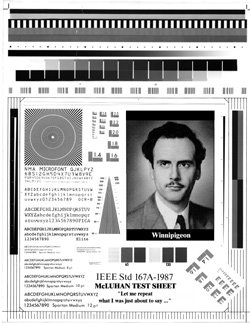
"Media ecology means using the media so that they help each other instead of just wiping each other out." He expresses it more precisely in Take Today where he notes: "Ecology is the simultaneous awareness of the interplay of the total field of processes. The simultaneity pushes the most banal situations into high relevance."_ Seeing that the Toronto school was grounded on a foundation of critique and correction (in McLuhan’s case, utilizing satire as an instrument) this was the main thrust of what they began in the mid-twentieth century, preparing for the millennium Yet for McLuhan and Carpenter the intellect and art were crucial as instruments and methods in achieving the rescue effort.
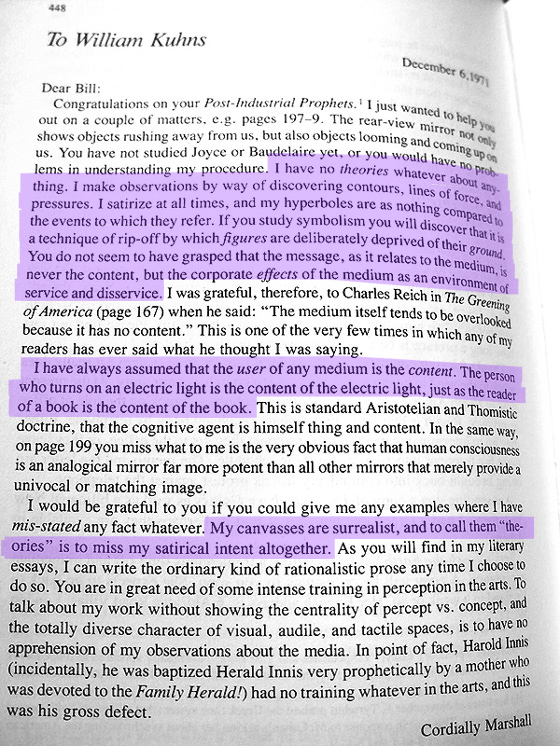
In 1991 the French philosopher, Giles Deleuze, in collaboration with the psychotherapist and media analyst, Félix Guattari, analyzed human thinking in such a way as to establish that artistic process in its involvement with percepts and affects is just as much an activity of thinking as the cognitive process of the philosopher is with its development of concepts or that of the scientist and technologist, with their .development of functives and propositions._ Such an approach finally permits a recognition of McLuhan and Carpenter’s continuous assertions that while being thinkers and intellectuals, they were working with percepts and implicitly affects. This makes most of their writings appear poetic and aphoristic in terms of the tradition of Francis Bacon’s Essays to which McLuhan frequently alluded throughout his career._ In a techno-scientific age, the Toronto School was developing a way of reinserting into intellectual discourse the value of grammatico-rhetorical (a poetic) exploration of media, culture and technology.
"... puns, verbal play, paradox, amibiguity, tricks with language such as paralellisms, anthitheses and play with vowels and consonants. Their method of writing was directed towards increasing the reader’s or listener’s perceptual and affective understanding of the phenomena under consideration."
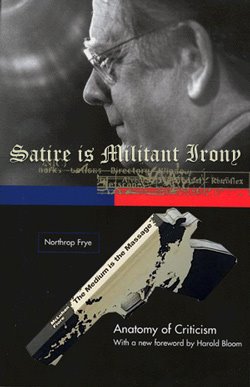
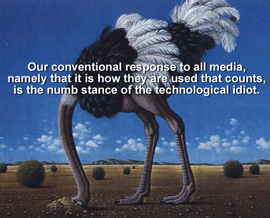
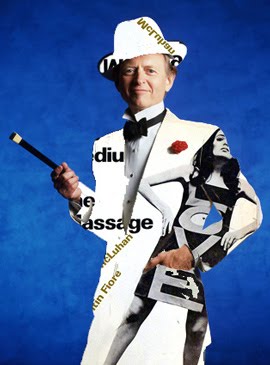
"Most of my writing is Menippean satire, presenting the actual surface of the world we live in as a ludicrous image."_ Such a comic critique of the contemporary world is central to the approach which the leaders of the Toronto School adopted in their own writings..."Like the Menippean satirists he admired, McLuhan felt that all "moralization" should be implicit and should arise from the way the sensitization to percepts and affects intensified the individual’s awareness of the contemporary maelstrom of a society nearly totally dominated by technologies managed by a few. So the style of McLuhan and of Carpenter was one that intensified perceptions and contextualized them in an affective ambience of comic critique.
So this is the future of a vision that began in a relative international backwater in 1950 where the accidental presence of several remarkable people and a small dedicated group of faculty and students sparked the launching of an adventure, which was to come to fruition half a century later. That adventure contributed to other academic futures as well by being one of the first major interdisciplinary projects in the humanities and human sciences with a long term impact that eventually led to the emergence of a wide variety of research and academic programs in communication, as well as the beginnings of media ecology.


![et cetera : LOVE [1977]](https://blogger.googleusercontent.com/img/b/R29vZ2xl/AVvXsEgQ8s7vwLQuzHDNgqlfBacxRkEbOErToak9kmgFl0VmyIYEqS9qIzNIVcXKpzTncPhqo3TSgOyztAguIW6OlXw65aFHmpx6cRzmvCUQQMTwUGUOd0iE0GbJakEc3g3kBAJrvlZP4z3eesg/s1600/etc1977.jpg)


![MAC LUHAN [sic] : LOST IN TRANSLATION](https://blogger.googleusercontent.com/img/b/R29vZ2xl/AVvXsEg92tMqBMDA917NDivsS2ZwIirx9KTf24tOCgFFnK65p7Hw5dvqEh1e2aefCynj2UW8u-k8zwBXbjgypsCXUcv-5G7ZCsyDB13giHEjmhVISAeW-oI_JV6ePOXW_XBDPwy2nREAoqRU7Z8/s1600/MAC.jpg)


![Les Yeux De Nadja [unpublished]](https://blogger.googleusercontent.com/img/b/R29vZ2xl/AVvXsEgrXohpIuxxYyjKoqBSQf3TpYGjnttZnjRFvmMdshadfnVKi7PMAjIqEuqYctZFXOFH2n-oH75oJx-YkaON7xvaZgVdvaK0zfSOurEmCKqmWF6qXh2F3VbqyixfGhvY4qH6LENMTs1wCIw/s1600/2xsurreal.jpg)


![PIED PIPERS [MARSH] ALL](https://blogger.googleusercontent.com/img/b/R29vZ2xl/AVvXsEhqvGIGG9lWZYhFZRVc_V8EJG2apQBsys4kNQOQsA0EV6H6Tg-SMN0sX15NXy_GzsF3xAUdcb2QlfvJk-RU-Rha-3Eu5Mnglkf5KLe6pccVqAP4VR_Gi4fGQ716QSmDe3Zna5Uwct5d2sw/s1600/piedPiperMarshALL270.png)









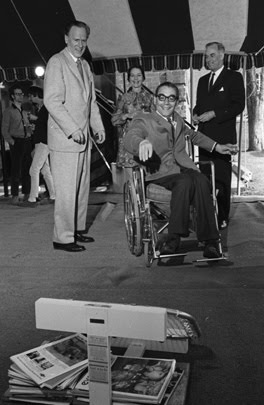


![PICNIC IN SPACE : The Great Minds of Our Time Film Series [1973]](https://blogger.googleusercontent.com/img/b/R29vZ2xl/AVvXsEjyov75DRIUBWcYLkzPYmupFy8CQ9dQ4Q798zDIN6jPNsSdBB_WuOcvPl4WjMAz10csG071oCO3BCUtIcKyHoIkCN0lCy0OxGCV_HrLXrGNKRpUiKMrqzkJh4LSc7jT_KrrqmClapSlVa8/s1600-r/PicnicInSpace.jpg)








![more Hidden ground [re:Bride] : the "flippancy" of tone seemed just "right"](https://blogger.googleusercontent.com/img/b/R29vZ2xl/AVvXsEg-hQyF9KGGhKYc73nUGmV1bStJ4fTJVh0-TL1ZtikLZEv5ppjhB3DOhFcVuzGq-kByrwtTAWgCcE173pA3UTIPe7h6xJjsPt7lRvNym007ZsdXenMDLNimKcwtaTOqkGleoxmXOeCKtxXL/s1600-r/LEAVISLEWIS.png)


![BABA WAWA [TODAY SHOW, Toronto City Hall 1970]](https://blogger.googleusercontent.com/img/b/R29vZ2xl/AVvXsEjTZAIFkA07K36WGk951vmZnLPU99fOdNzlvVhyphenhyphenhKZEKu2n2AW5EA1CDZGaTk0aYRXUv7IOXG39igaikoE6SWm8j7QIG96wYRE54oBXwvlaNCJzp15vdkrcqR97IMMny-8sHjM-VDotTOaY/s1600-r/babaWawa.jpg)


![enter the dragon : "typhon in america" [unpublished]](https://blogger.googleusercontent.com/img/b/R29vZ2xl/AVvXsEjdCnZdJ6JbaLc6hyUmUJo5UJ0m8WZSj_afYU9oRlHKIUgAIfcy2EPHNAptSRYEAmpOf0Xaa0B8iMgOTF302lY0Xmbyne0hvrdRyNo-t0Q-PPdzqX39uI3T5x5FppRPaQf9sSaXytrOpWVN/s1600-r/TIA.jpg)











![Take Today [1972] : "the consumer becomes a producer..."](https://blogger.googleusercontent.com/img/b/R29vZ2xl/AVvXsEhA53bdVdTaXdQo1fDmrsI8oiAwF-3jampcanOq8uk3QMh8_ImkNsTiKd4-RnZY8Vbwqh1fymJiyCl1CSLcSonXHQM6XbnJYQi_Vu89gbAV4jVq73EtlbM3w6CthyphenhyphenV_pHEjE6eu_VhC489u/s1600-r/PROSUMER.jpg)














![" Outtragedy of poetscalds!, Acomedy of letters " [ FW 425.24]](https://blogger.googleusercontent.com/img/b/R29vZ2xl/AVvXsEhJMrJLN3oPUb25A2tjQtWZcZxA4wZB0IOvaIAvxosAUqlFc258HHvzvlnHHvKhKq7hG3epo76izY2Bu0HC3Cy-8S46Rf0Wni3L8j8jEfpT7sXK3UFlXBMtN2v2JdrmdxvWk8VWKjkhN4-9/s1600-r/preplexLP.png)





![mars[HAL]9000 : " Tomorrow is our permanent address."](https://blogger.googleusercontent.com/img/b/R29vZ2xl/AVvXsEhmblupqmUiuV3GbyayJiDRGEO63TEgwjHi-i8b0kVYDvXrKFWTCyl-e21la4QJXC4nDFDzx51Omi6fYPLJcqRHFoP6zSsL0CVZF98eMf6mxCE2WDfvMmT4q9G3X45-P0IYGDmliE0fCR3C/s1600-r/marsHAL9000_250.jpg)

































![Lucifer [from Latin] <br>meaning "light-bearer"](https://blogger.googleusercontent.com/img/b/R29vZ2xl/AVvXsEhq-2kZZOfh-Syv1Ewa0Ns2O6ZeP59pcsJp9ihhKcXCaovYZO_cKxffC5iSKOXFHr6E1jiHc6zedt1U6I95831RgpVdm3qk8-9C3y1yPyrCiQe4jgx-DsbeHnjKnw9t6Qx3ZM5TSYxiPj5H/s1600-r/lucifer.png)